
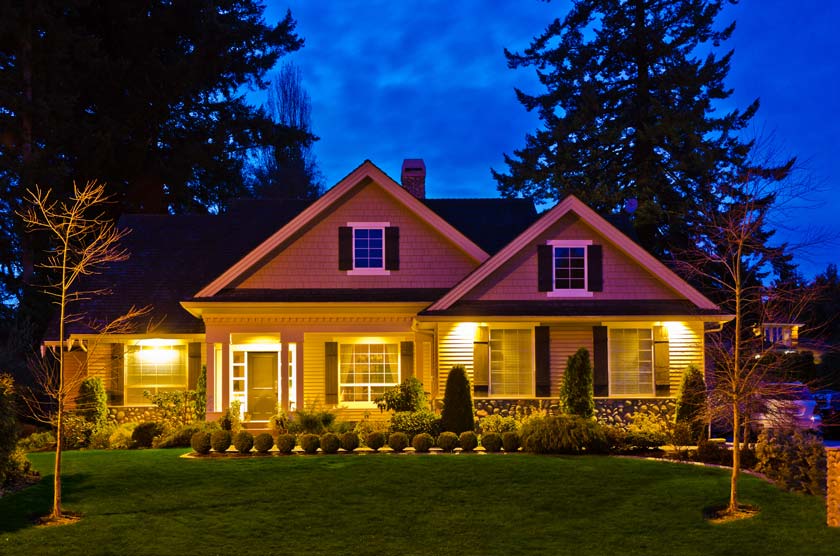
Installing Outdoor Security Lighting for Your Home

Your home may already be equipped with an outdoor light or two. But maybe it doesn’t feel quite safe enough. If you want to feel a little safer in your home when you turn off the lights, choosing outdoor security lighting that’s operated with motion sensors may help. The right outdoor security lighting system can truly make a difference when it comes to the safety of you, your home and your family. If you’re interested in a security lighting plan for your home, you’re in the right place. Gervais Electric—based in Franklin, TN—serves all of the Middle Tennessee area with high quality electrical products and services. We’d like to take a few moments to share some benefits of outdoor security lighting, installation process, energy efficiency options, and how you can get started with an installation for your home right away.

Benefits of Outdoor Security Lighting

Crime Deterrent – When it comes down to it, security lighting goes a long way in deterring criminals. When would-be criminals see a home that’s fully lit in the front, they do not want to enter the property for fear of being seen, caught and arrested. A well-lit home is a sure-fire, first line of defense against home invasion. Compared to a home alarm system, outdoor security lighting is the most affordable and effective forms of crime deterrent you can buy!

Added safety – It’s difficult to walk around safely in the dark. No matter how well you may think you know your yard, there is still potential that you or a guest could trip at night if you don’t have proper lighting. Or, maybe you forgot to turn on the porch light when you left the house. if you’ve ever had to fumble around on your front porch looking for the right place to put the key, call Gervais Electric!

Convenience – If you enjoy spending time outdoors, security lighting can help provide a better way to do so by giving you a great new way to enjoy your yard. These days, the right kind of lighting not only looks nice, but offers the added benefit of a well-lit yard. When the weather is nice, nothing beats being outdoors even once the sun has set!

Energy Efficiency of Today’s Security Lights

Products that are available on the market today don’t use a lot of energy. Unlike the halogen bulbs of the past that used 200 or 250 watts of power, the new energy efficient, low voltage, LED lighting options use anywhere from 25 to 35 watts. Properly placed lights like this will provide plenty of light and save you on energy costs. Options available for these outdoor security lights also include motion sensor or dusk-to-dawn settings that allow more control over usage and security.

Why Hiring a Professional for Installation is Key

When you’re ready to install outdoor security lighting, it’s essential to make sure the installation is performed by a licensed professional. There are several reasons why this is important. First, you want to make sure the lighting is powered correctly so that each fixture operates as it should without overloading the circuitry. Secondly, it’s important for safety purposes that all the lighting is installed in positions that offer the most coverage with the least number of fixtures. Your home may only need two or three fixtures to illuminate your entire front yard, but the professionals here at Gervais Electric will know for sure. Third, choosing the right product for your security lighting can be a daunting task. We have the experience you can count on to make sure you’re getting exactly what fits your needs.

Offering a high standard of satisfaction to all our clients, big of small, we take pride in delivering results that are always in compliance with the best practices, codes and standards in our industry. The results-oriented work we provide is dependent on our team of experts—a well-oiled machine—ensuring expedient services that will solve your problem and complete your project without risking safety of your home, your family, or your work environment.

Please call us at (615) 973-1436 or send us a message through the form below. One of our friendly service professionals will be in touch. Thanks for visiting us. We look forward to speaking with you very soon!
Should I Have an Emergency Backup Generator?

With winter ice storms, spring thunderstorms, and summer tornados, Nashville has its fair share of power outages caused by nasty weather. Everyone has experienced a temporary loss of power, and some have even experienced power outages that last for days. If you’re part of the latter group, you know how difficult it can be to go more than a few hours without power in your home. It’s probably led you into a thought pattern of purchasing an emergency backup generator for your residence. To help keep your home powered, come what may, a backup generator may be exactly what you need in those circumstances of power loss. The huge convenience of being able to keep things running after a debilitating storm usually outweighs the added cost of having a generator. If you’re still debating, or just researching the topic for more information, then you’ve come to the right place. At Gervais Electric we’ve compiled this useful guide to help you through the consideration process.

What necessities run on electricity in your home?

For most homeowners deciding to get a generator depends on what essentials need electricity to run such as your heating/cooling system, hot water heater, refrigerator, oven and stove, etc. Many of these items can run on gas, so the first step is to find out what your essential appliances use. If you find that your most important appliances run on electricity, that will help guide you down the path to finding the right size generator for your home’s power needs.

Do you have enough outdoor space for a backup generator?

Generators come in all sizes. From small, portable generators, to permanently installed standby generators much like the footprint of an air conditioner unit. Smaller generators typically run on batteries or gasoline whereas the larger standby units run on gas or propane. If you go with the more affordable, portable generators that run on gasoline, you will need to make sure you have a safe place to operate it outdoors. A covered, open-air area for proper ventilation at least 15 feet from your home is best to avoid carbon monoxide fumes entering your home. A single-family home may offer you plenty of room for this, while an apartment or multi-family building will not. Keep in mind that a gasoline generator will also require space for backup fuel to be stored safely in plastic fuel cans.

Types of generators

There are generally three main types of generators: portable, inverter, and standby.

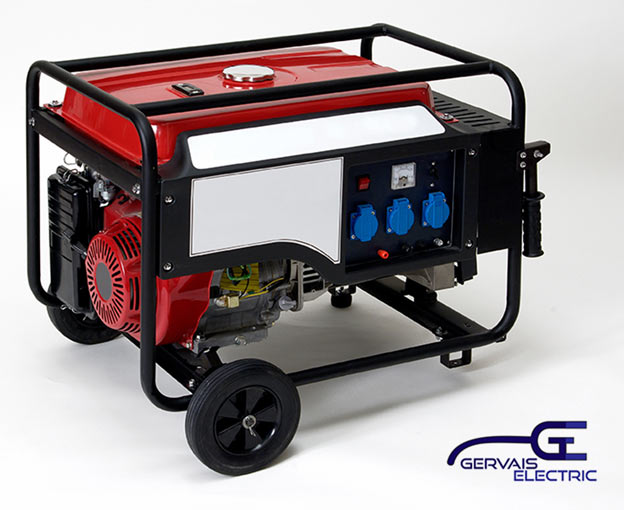
Portable generator: A portable generator is powered by gasoline or diesel fuel and is good for providing temporary electrical power. Portable generators usually provide enough power to run a television, a freezer and a refrigerator. Depending on your needs, this may be the perfect fit as a backup generator for you during a temporary power outage. These can be purchased at your local home store.

Inverter generator: An inverter generator produces AC power with an engine connected to an alternator. AC power produced by the generator is converted into DC power by use of a rectifier for standard usage with home electronics. These generators produce high levels of performance, but they usually come at a premium price. Inverter generators are much more efficient than a standard portable generator because the engine automatically idles up and down depending on the demand that’s needed at the time. It will still run on gasoline or diesel but will not need to be refueled as often as the standard portable generator. These can be purchased at your local home store. Large versions of these generators can be wired directly into your electrical panel with a transfer switch to power your entire home. Mid-sized and small, recreational version of inverter generators can also be purchased but they will not wire directly into your electrical panel. Instead, you will individually plug appliances into the generator.

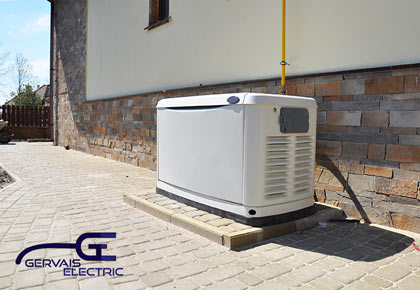
A Standby Generator

Standby generator: A standby generator is a more permanent type of generator that can be installed at your home. It is a great choice as an emergency backup generator because it is wired directly into your home’s electrical panel and typically runs on propane or natural gas. The standby generator operates automatically during a power loss by sensing in only a couple of seconds when a power outage has occurred. It also delivers permanent power protections as a standby generator with an automatic transfer switch for safety. The standby generator can easily power your entire home electronics, heating and air conditioning system, as well as lights and hot water. This type of system will need to be installed by a licensed electrician. Never attempt to wire directly into your electrical panel unless you are a licensed electrician!

If you’re interested in learning more about installing an emergency backup generator in your home, contact the friendly team at Gervais Electric for a no-hassle consultation. Reach us at 615-973-1436 in the Nashville area, or send us a message below and we will get back in touch with you shortly!