
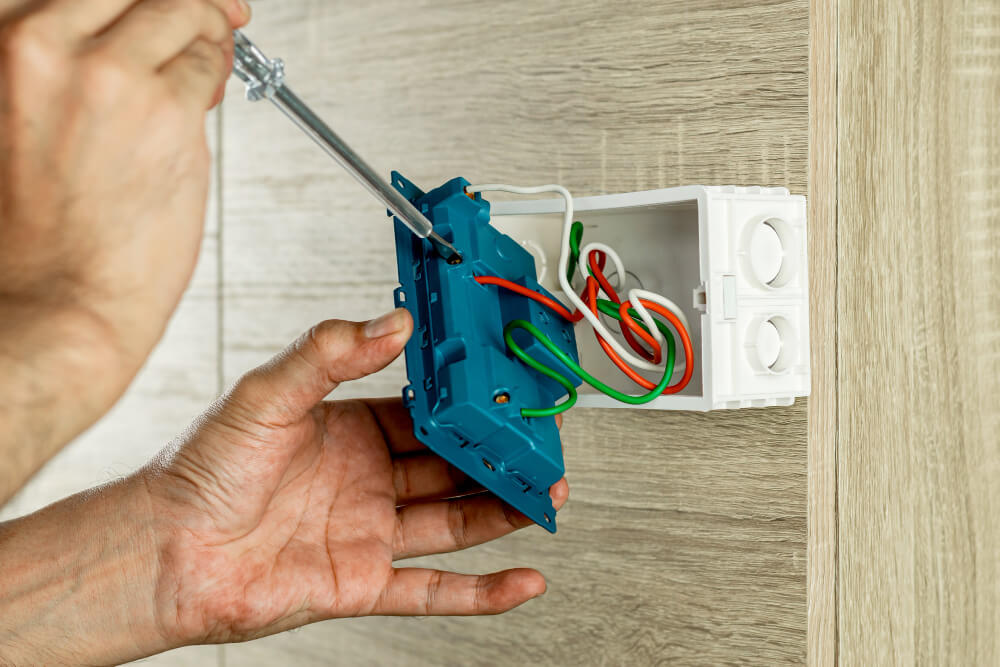
The Top 10 Electrical Safety Tips Every Homeowner Should Know

Electrical Safety Tips for Homeowners

Electricity is an integral part of modern life, but it comes with risks. As a homeowner, it’s vital to be aware of electrical safety to protect your home and loved ones. Here are the top 10 electrical safety tips every homeowner should know.

  1. Respect Water and Electricity Separation: It’s crucial to maintain a strict separation between electricity and water. Water conducts electricity, so the presence of water near electrical appliances significantly increases the risk of electrocution. Always dry your hands before handling electrical devices and keep gadgets away from sinks, bathtubs, and showers.
  2. Regularly Check Cords and Plugs: Inspecting electrical cords and plugs periodically for wear and tear can prevent potential hazards. Look for signs like exposed wires, cuts, or abrasions on cords. Loose plugs can also cause sparks, leading to electrical fires. Make it a habit to conduct regular checks, especially for appliances that are used frequently.
  3. Use Extension Cords Wisely: Extension cords are designed for temporary use. Prolonged reliance on them can cause overheating and increase the risk of fire, especially if they are coiled or covered by rugs or furniture. Ensure you use the right cord for the job – indoor cords for inside and heavy-duty outdoor cords for outside.
  4. Understand Your Home’s Electrical Capacity: Knowing the electrical capacity of your home is essential to prevent overloading circuits. Overloading can occur when too many appliances are connected to a single circuit, leading to tripped breakers, blown fuses, or even fires. Familiarize yourself with the amperage limits of your circuits and adhere to them.
  5. Childproof Electrical Outlets: Children are naturally curious and might attempt to insert objects into outlets. To prevent accidental electrocution, it’s advisable to install tamper-resistant outlets or safety caps. These devices make it difficult for children to access the electrical contacts.
  6. Keep Electrical Appliances and Tools Away from Children: Electrical tools and appliances should be stored in a place where children can’t reach them. This includes items like hair dryers, toasters, irons, and power tools. Educate children about the dangers of electricity and supervise their interaction with electrical devices.
  7. Know Your Circuit Breaker: Understanding how to operate your home’s circuit breaker or fuse box can be a lifesaver in emergencies. Know how to quickly shut off power to the entire house or specific circuits. Label each circuit clearly for quick identification.
  8. Practice Caution with Space Heaters: Space heaters are a common cause of home fires. Keep them away from flammable materials like curtains, bedding, and furniture. Never leave a space heater running unattended or while sleeping.
  9. Invest in Ground Fault Circuit Interrupters (GFCIs): GFCIs can prevent electrocution by shutting off the flow of electricity when a fault is detected. They are particularly important in areas where water and electricity might come into contact, such as bathrooms, kitchens, and outdoor spaces.
  10. Hire Qualified Electricians for Installations and Repairs: Electrical work can be complex and dangerous. For installations, upgrades, or repairs, hiring a qualified electrician ensures safety and compliance with local electrical codes. They have the expertise to handle electrical issues safely and effectively

Conclusion: These safety tips provide a foundation for electrical safety in your home. Remember, taking preventive measures and understanding the basics of electricity can go a long way in protecting your household. Stay safe and consult professionals when in doubt.

This article is for informational purposes and should not replace professional advice. Always consult with a licensed electrician for electrical work in your home.
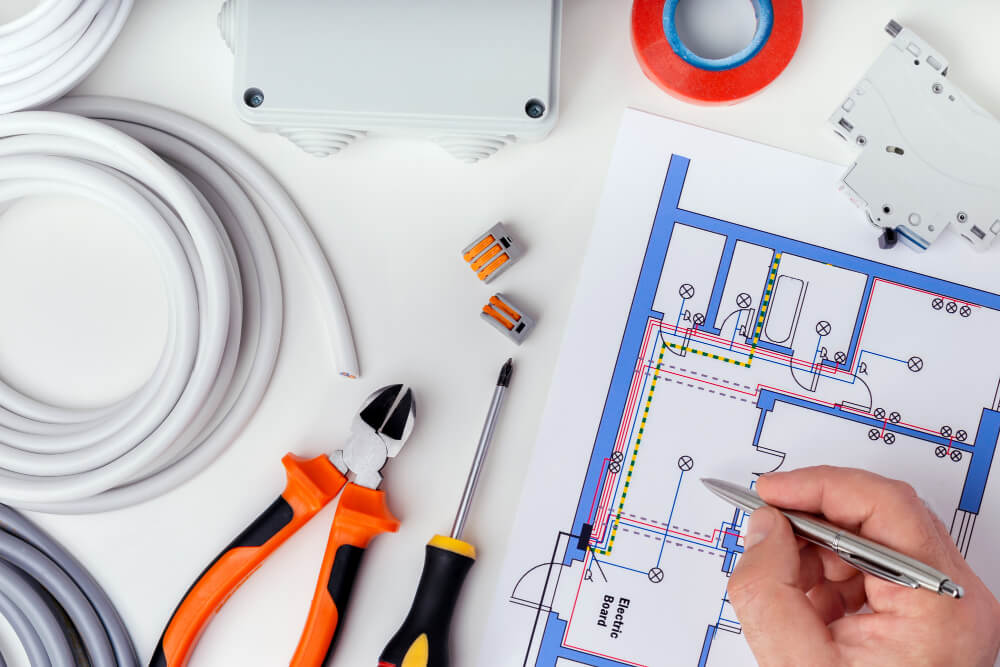

Understanding Your Home’s Electrical System: A Beginner’s Guide

Home Electrical System Basics

Electricity is a fundamental part of our daily lives, powering everything from the smallest gadget to the entire house. As homeowners, having a basic understanding of your home’s electrical system is crucial for safety, efficiency, and effective maintenance. This guide serves as an introductory walkthrough of the key components and functions of typical residential electrical systems.

The Main Components:

  • Service Head and Meter: Electricity enters your home through the service head and is measured by the meter. This is how your utility company tracks your usage.
  • Main Breaker Panel: Often referred to as the fuse box or circuit breaker panel, this is the control center for your home’s electricity. It distributes power to different circuits and provides a safety mechanism to shut off power if there’s an overload.
  • Circuits and Circuit Breakers: Your home is divided into multiple circuits, each protected by a circuit breaker. These breakers prevent overcurrent, reducing the risk of fire or damage to appliances.

Understanding Voltage, Amps, and Watts:

  • Voltage (V): This is the pressure from an electrical circuit’s power source that pushes charged electrons through a conducting loop.
  • Amperage (A): This refers to the number of electrons moving through a circuit per second.
  • Wattage (W): This is the product of voltage and amperage and is a measure of how much power an appliance uses.

Electrical Wiring:

  • Hot Wire (typically black or red): This wire carries electricity from the panel to the outlet or fixture.
  • Neutral Wire (white): This wire carries electricity back to the panel after it flows through the appliance.
  • Ground Wire (green or bare copper): This safety wire directs electricity into the ground in case of a fault.

Outlets and Switches:

  • Outlets: These are points where appliances and devices can be plugged in. There are different types, including standard, GFCI (Ground Fault Circuit Interrupter), and AFCI (Arc Fault Circuit Interrupter).
  • Switches: These control the flow of electricity to a device or appliance. They can be simple on-off types or more complex like dimmer switches.

Home Electrical System Basics: Safety Tips:

  • Always turn off the main power when doing any electrical work.
  • Test outlets and switches regularly to ensure they are functioning properly.
  • Never overload outlets with too many appliances.
  • Familiarize yourself with the location of your main breaker panel and how to turn off power in an emergency.
  • Consider hiring a licensed electrician for complex installations or repairs.

Conclusion

Understanding the basics of your home’s electrical system is not just about handling repairs or installations; it’s primarily about ensuring the safety and efficiency of your living space. This guide provides a foundation, but remember, electricity can be dangerous. When in doubt, always consult with a professional electrician to handle complex issues or installations.

Be Aware of Winter Electrical Issues that Commonly Occur

The winter months present with extremely cold temperatures as well as a number of potential issues that can arise with your home electrical system. It is important for homeowners to properly maintain their electrical system in the winter months and throughout the entire year so as to avoid costly repairs. With that said, let’s take time to recognize a handful of winter electrical issues that commonly occur and you want to make every effort to avoid.

Electrical Issues to Avoid

  • As the winter temperatures fall, homeowners are going to find themselves using their home heating systems along with portable heaters a great deal, both of which can cause the circuit breaker in your home to trip. You may want to call in an electrician to increase the power to the circuit in your home in an effort to accommodate all the extra electrical items and appliances being used during the frigid winter months.
  • We would all agree that the tough winter weather brings with it snow, ice, high winds, freezing temperatures and downed wires along with other damages. When the winter weather hits it can put an enormous strain on the electrical grid resulting in a power outage. A power outage leaves you without heat, hot water, lights, and refrigeration. It is wise to have a generator on hand should a power outage occur to ensure that you are not left out in the cold.
  • Another very common winter electrical issue to be on the lookout for is improper use of portable heaters. Most homes use space heaters in addition to their primary heating system. Older model space heaters tend to use a great deal of electricity and are not energy efficient. These older heaters can also cause home fires. It is imperative that when using a space heater you plug it directly into a wall outlet and avoid using extension cords. Be sure to also position the heater away from any items that are flammable such as curtains, drapes, sofas and other furniture items.


Keep Your Home Safe This Winter

In addition to awareness of the above electrical issues, there are a number of steps you can take to ensure the overall safety of your home winter after winter. Here are a few important tips to follow:

  • Start by checking the electrical panel in your home. Be sure that all its components are working properly, that all the switches are in working order and that everything is labelled accurately.
  • If you have any leaks or weak pipes, it is best to fix them all. The cold winter temperatures can cause pipes to burst so take steps to reduce the chances of any damage occurring.
  • Mak certain that all the smoke detectors and carbon monoxide detectors are all working properly. Check to see if the batteries need replacing by performing a test on each device.
  • Be sure to check and change the filter in your HVAC system. Filters fall prey to dust, dander, dirt and debris buildup that can cause your furnace to malfunction.
  • Make sure there are no broken electrical outlets in your home. If there are, it is important to have them repaired right away since they can result in home fires.
  • If necessary, install high quality surge protectors for use with all your appliances. This will help to minimize the electrical burden that is typically increased during the cold winter months. You may want to consider a surge protector for the whole house especially if the electrical usage in your home is very high.
  • Lastly, you may consider hiring an electrician to perform a full inspection of your home’s wiring and electrical system. This is by far the best way to avoid winter electrical issues and ensure the overall safety of your home and family.

For All Your Electrical Service Repairs and Maintenance, Call On Our Team

Discipline yourself to follow all these important tips above so that any possible hazards can be detected in advance. If your home is an older home, we highly recommend you have an inspection performed of your electrical wiring and system. That’s where Gervais Electric, Inc. comes in. Our highly skilled and experienced team of electricians has all the insight, knowledge and tools needed to identify potential problems and provide effective solutions quickly.

For more information on how to avoid winter electrical issues, to schedule a service call or repair appointment, or to schedule an electrical inspection be sure to give a shout out to one of our team members today. The holidays are now upon us, so don’t delay in having your home electrical wiring and system inspected to ensure the safety of all your holiday guests and family. Choose Gervais Electric, Inc. for all your home electrical needs whether its winter, spring, summer or fall. You can always count on us!