Is Your Old Wiring a Commercial Fire Hazard?

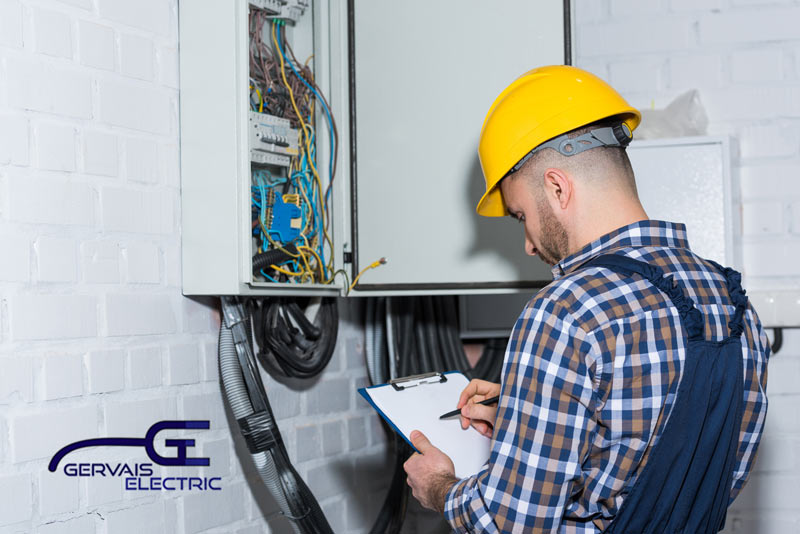
Electrical wiring in commercial buildings is typically hidden behind the drywall and plaster. An older electrical system often contributes to a risk of fire, and most of the fires in commercial buildings that take place can be attributed to that as well. If you have an older electrical system in your commercial building, then the risk of fire is greater. There are several commercial fire hazards that exist when you have an old electrical system, which is why we want to take this opportunity to share some of the obvious hazards with you that can exist.

Commercial Fire Hazards

local electrician

Knob and tube wiring – Most older buildings have what is commonly referred to as ‘knob and tube’ wiring, which over time, becomes compromised, perhaps by animals gnawing at the wires or even simple disintegration. It can then become one of the more common causes of electrical fires in commercial buildings.

Low amp wiring – Many modern appliances and other business equipment today require higher amps to operate effectively and efficiently. The older wiring in many aged commercial buildings is often rated for lower amps than what is required to effectively and safely operate all types of modern equipment and appliances.

Wiring that is poorly modified – In much older commercial buildings, the wiring is often altered many times over the years and most times the altering is performed by people who lack appropriate electrical experience and training. When this occurs, loose live wires may be present and even poorly executed connections which can wreak havoc behind the walls of your older commercial building.

Wiring that has old insulation – Insulation serves to protect electrical wiring. However, over the years insulation on old wiring can get destroyed by animals, become damaged by nails that are tapped into the walls, or simply disintegrate with age. When this occurs, the wires become exposed and can then lead to sparks and even fire.

Poor electrical design – The electrical system in your older commercial building was more than likely designed to meet old standards of yesteryears that, today, are no longer compliant. Standards and codes have changed drastically over the years, which means that the wiring in your old commercial building is not only a commercial fire hazard but is sure to fail any inspection that may be performed.

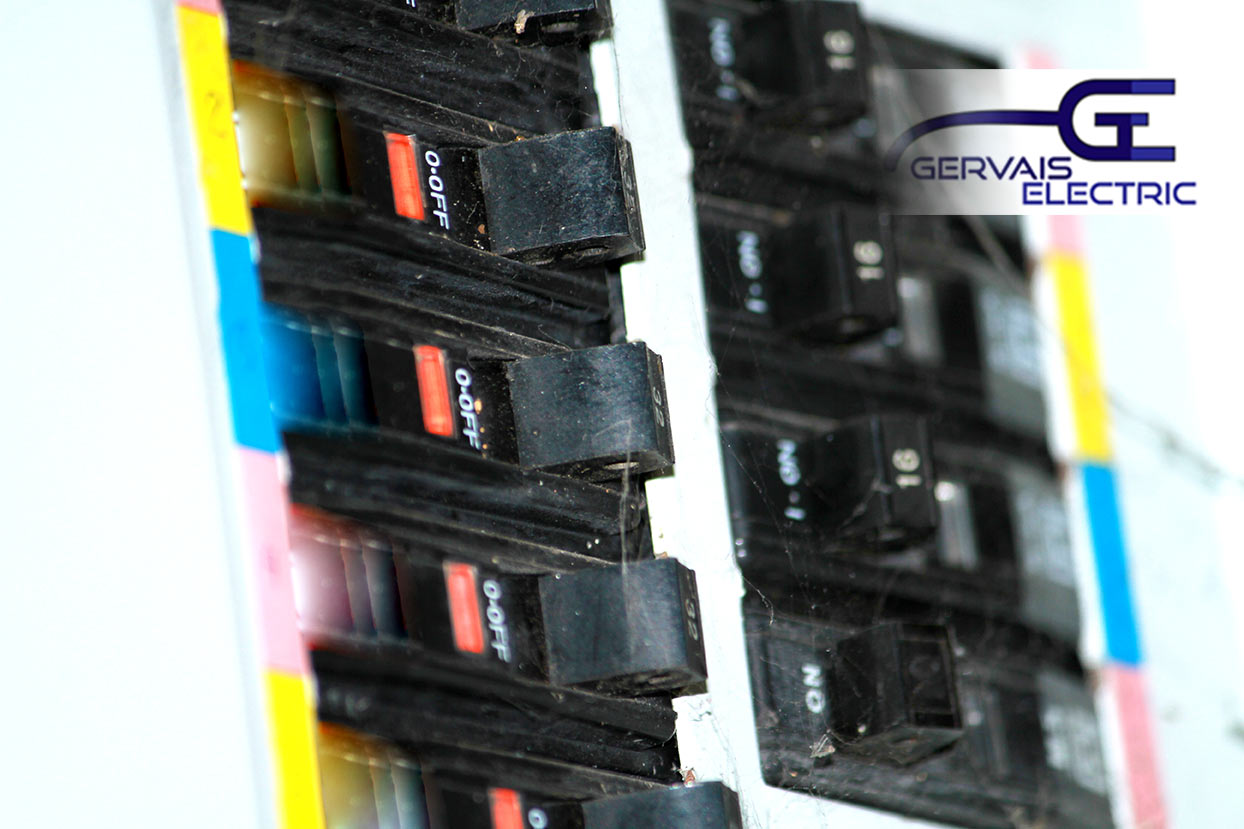
Faulty breakers –  If your commercial electrical panel has not been upgraded for a good long time, then more than likely the switches and the breakers may very well be faulty. If you notice that they are not working properly, then it’s time to have the inspected and upgraded because surely, they can present with many risks and dangers.

If you own a commercial building that was constructed in the 1970’s or sooner, then rest assured your electrical system is outdated. You probably have a good many electrical concerns that are lurking behind your walls. If you are unsure as to the age of your building, or whether or not there may be risks or danger of commercial fire hazards then it is best to reach out to a professional commercial electrician to inspect your system and make certain that everything is in tip top working order.

If you need an electrical inspection, are worried about commercial fire hazards or need any other electrical services or repairs, then the professionals here at Gervais Electric, Inc. are just the team for you.   Give a shout out to our team today and schedule your appointment.  We look forward to serving you and to providing you with the highest quality, affordable electrical products and services this side of Franklin!
Common Causes of a Tripped Circuit Breaker In Your Home

What is a Circuit Breaker?

Circuit breaker switches protect the electric circuits in your home from damage that can be caused by short circuiting or electrical overloads. Multiple electric currents flow into your home and are directed to your circuit breaker box which is typically located in the basement or garage of your home. When the electric currents reach the breaker box they are split into several circuits and are then delivered throughout your home.

The rooms in your home require varied levels of electrical power depending upon the electrical appliances and the items in each room that are plugged into wall outlets. Some rooms may require only 15-amp circuits, while others may require 20 to 100-amp circuits. The circuit breaker in your home will ‘trip’ or cut off the electrical flow in your home, when it detects a fault condition somewhere in the home and shuts itself off to avoid wiring from overheating or from igniting and starting a house fire.

Resetting Your Circuit Breaker

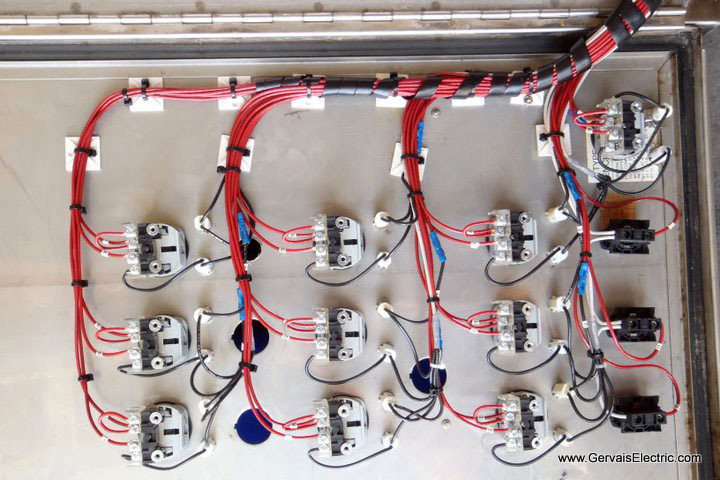
Electrical Panel

When the circuit breaker trips, resetting it is fairly easy to do.  You simply need to go the electrical panel and locate the one circuit switch that is not perfectly aligned with the others and firmly push it back to the on-position.  If this doesn’t resolve the problem, you may need to firmly push the breaker switch off then on two or three times.  However, if the circuit breaker trips again, right after resetting it, then surely you have a problem that needs identifying and resolving.  When you experience a tripped circuit breaker, it may be the result of either an overloaded circuit, a short circuit, or a ground fault.

Overloaded Circuit – If the problem is an overloaded circuit, which is the most common problem, that means that you have more current flowing through the circuit than it is equipped to handle, so it turns itself off to avoid any damage.  To resolve this problem, simply unplug any items that you are not currently using, and if the problem persists, then it’s time to call in the experts at Gervais Electric to identify and repair the problem.

Short circuit – If the tripped breaker problem is not the result of an overloaded circuit, then most likely the cause is a short circuit.  A short circuit is a more serious issue than an overloaded circuit because it indicates that a black (hot) wire has come in contact with another hot or neutral wire.  To determine if a short circuit is the source of your tripped breaker, your power lines and devices need to be inspected to ensure they are not damaged. You can check your power outlets, switches, and cord-ends for any discoloration and walk about the house to see if there is a burning smell.  Again, if you are unable to locate the source of the problem reach out to the experts at Gervais Electric so we can identify the problem and provide an effective solution.

Ground Fault – Finally, if you have exhausted the first two possibilities of an overloaded circuit or a short circuit, then it is probably time to check if your ground fault is causing the issues at hand.  A ground fault presents with the same characteristics as a short circuit in that it occurs when the black (hot) wire comes in contact with the ground (bare) wire or touches the metal box enclosing the wire junctions.  As in the case of a short circuit, with a ground fault you may also notice a burning smell or discoloration around your electrical outlets or switches.  A ground fault is typically caused by faulty or damaged equipment and are exceedingly dangerous.  If you believe that a ground fault may be the source of a repeated tripped circuit breaker issue, then do not attempt to repair this problem on your own.  Rather, contact our electricians to identify and confirm the ground fault and provide you with appropriate solutions to avoid the problem from reoccurring in the future.

Safety Should Always Be Your Priority

As we all know, safety is critical when dealing with any type of an electrical issue no matter how small or how big the issue may be.  You should never attempt to inspect, identify or repair electrical issues, such as tripped circuit breakers unless you are absolutely certain that the repair process is safe and you are confident of steps you need to follow to resolve the problem.  If you have even the slightest doubt, contact Gervais Electric at 615-973-1436 for all your circuit breaker problems and all your electrical needs.  If it is safe for you to repair yourself, we are happy to walk you through the process over the phone. 

How EV Users Repurpose Electric Vehicle Batteries

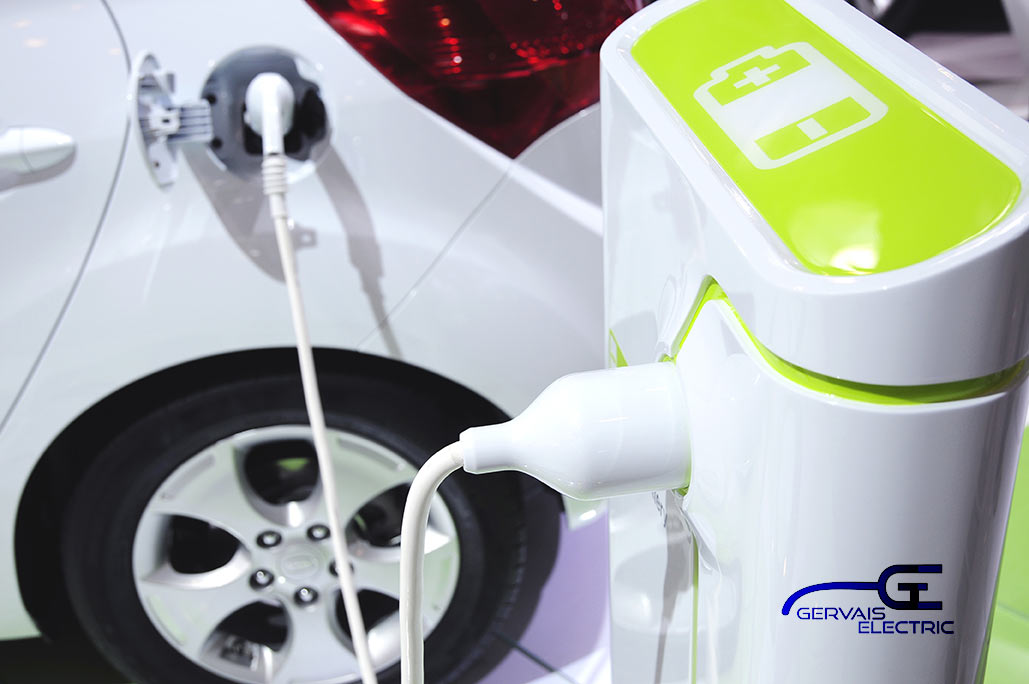
As the first rounds of electric vehicle batteries that hit the market in about 2010 begin to go into retirement, many users are finding unique ways to re-purpose electric vehicle batteries. Lithium-ion batteries, which are used in most electric vehicles, are still viable after they’ve been replaced with new batteries. The used batteries often have at least another seven to ten years of useful electricity discharge available once they’ve been stripped from the electric vehicles. It is not enough power for the vehicle to continue using, but it can be useful for many other applications. Without finding a way to re-purpose these batteries, the impact on landfills would be tremendous, in excess of about 3.4 million battery packs by the year 2025 according to a Bloomberg forecast. Gervais Electric, a certified Tesla and BMW vehicle-charger installer, has several useful tips to help users re-purpose electric vehicle batteries.

As electric vehicles become more and more popular, it is suggested that the world’s energy may become more dependent upon the retired electric vehicle batteries in ways which currently use traditional power grids. In China, where nearly half of the world’s electric vehicles are currently driven, they’ve already begun using recovered batteries to power less demanding electronics by using solar and wind turbines to recharge the batteries efficiently. In Japan, for example, used Nissan Leaf batteries are storing power with solar panels and being used to power various appliances at 7-Eleven stores like food warmers and drink coolers. This makes used electric vehicle batteries retain a certain amount of value. When it comes time to replace the batteries on your electric vehicle, not only can you find ways to use them for a power resource, but you can also find buyers who would like to use them in various ways as well!

Use with Solar Panels

For some homeowners who employ solar power, using the retired batteries as a means of electricity storage has been a great way to save money and supplement solar power. Whether you experience regular power outages or you’re running completely off the grid on a solar system, using a re-purposed electric vehicle battery as storage can help you get through overcast days and nights when you may otherwise be without electricity. The batteries are charged when conditions are good and feed into the home when the power is needed.

EV Batteries as a Backup Power Source

The average home uses around 30 kilowatt-hours per day. Although consumption does range depending on the time of day, temperature, and other variables, most households use the most electricity in the mornings getting ready for their days and at night preparing dinner, watching tv, doing laundry, etc. When considering backup power options for your home, it is important to understand your family’s peak electricity consumption times so you’ll be prepared during a power outage. It’s also important to focus on using less electricity during a power outage so that your backup power source can provide enough energy to your home during a blackout. Typically, especially in urban areas, power outages only last for a few hours so having enough stored power in place for a few hours would likely be ten kilowatt-hours or less. For example, a spent Chevy Volt battery can serve as a backup power resource with storage capacity up to 16 kilowatt-hours.

If you have a need for configuring a backup power source using retired electric vehicle batteries or ideas to re-purpose electric vehicle batteries, please contact Gervais Electric. We would be happy to help you devise a plan that works to meet your power needs.

The Future of Electric Cars

With the latest innovations in electric vehicles, many experts believe that electric cars are the future. The green movement across the country is strong and many believe in this technology to help control our carbon footprint and our negative impact on the environment. Are Americans ready for this type of change? When it comes to replacing gas-guzzlers with electric automobiles, many Americans are split on the issue. However, even with the most Americans holding out on purchasing an electric vehicle just yet, a future of all electric cars is easy to envision when you dive into the numbers.

Innovations in rechargeable batteries

With the development of lithium-ion batteries in the 1970’s, which allowed for a rechargeable battery technology, the stage was set for all sorts of new innovations in the electronics fields. Rechargeable tools, battery powered appliances, and even electric vehicles began to hit the market. The biggest drawback to lithium-ion batteries in the past few decades has been the cost. However, with further developments in the technology, prices over the past 10 years have begun to fall. This is great news for the companies that are producing electric vehicles and for consumers who are finally able to afford such a high-tech vehicle. Over the past 10 years, prices of rechargeable lithium-ion batteries have fallen nearly 90%! Imagine that number another ten years from now. Electric vehicles over the course of the next ten years may become commonplace as people move from gas and diesel-powered engines to electric engines.

Good news for rechargeable batteries doesn’t stop with a lowered price tag, but also carries over into battery capacity. Many people would consider a future of electric cars if it weren’t for range limitations. Most people would like to be able to drive hundreds of miles on a single charge without the worry of having to stop and recharge several times over the course of a trip. With Tesla, a leader in electric vehicle production and innovation, currently producing electric cars that have a range upward of 300 miles, those fears of range limitations are beginning to fade away as well! The Tesla Model S has a range of 335 miles according to insideevs.com. In fact, Tesla holds the top 8 spots in electric vehicle range capacity. Other producers such as Hyundai, Chevrolet, Volkswagen, BMW and Nissan are generally below the 250-mile range mark. Once again, with great progress in technology, mileage range for electric vehicles will probably not even be an issue ten years from now. Most people cannot drive more than 400 miles in a single day before their own batteries need to be recharged!

Less Maintenance and Higher Reliability

Another factor that electric cars have going for them is the low maintenance and low-cost of operation. Electric vehicles don’t have the traditional parts commonly found on gasoline vehicles such as spark plugs, thermostats, ignition coils, oxygen sensors and about 2,000 other drive-train parts. In fact, compared to a traditional gasoline-powered vehicle with about 2,000 drive-train parts, an electric vehicle only has 20. Yep, that’s 99% fewer parts!

Cheaper operation

Unless you live somewhere that has exceptionally cheap gasoline available, electric vehicles are generally much less expensive to fuel. If you dive into the numbers, electricity averages about 11 cents per kilowatt hour. Nissan claims their Leaf can fully charge for less than $3.00. At the national average price of gasoline, currently about $2.60 per gallon in America, that means you can drive a Nissan Leaf its full range (about 100 miles) for close to the price of one gallon of gasoline. That’s nearly four times cheaper than the average car that gets about 25 miles per gallon. With the battery capacity and long-range innovations from car manufacturers, that number is expected to be even more energy efficient over the next few years.

Charging station installation

Gervais Electric, a leader in Middle Tennessee for electric vehicle charging station installations, estimates the charging station installation, in comparison to the cost savings of driving an electric vs. gasoline vehicle, pays for itself within the first year. Gervais Electric comes highly recommended from local electric car dealers like BMW, Tesla and others because of our commitment to proper training, certification, and quality products.

If you’ve been following the latest news on electric vehicles and see a future of electric cars ahead, give us a call at 615-973-1436 or send us a message below and let us help guide you in your options. We look forward to serving you.

A History of Electricity

Electricity is a truly amazing innovation that most of us take for granted. Can you imagine not having it? Sometimes we may forget how most people lived without it, not so long ago. Even at the turn of the 20th century, most Americans lit their homes with candles or gas lights and heated their homes with coal or wood. These days, you flip a switch and like magic, the house is illuminated. Technology has come a very long way in a short amount of time. Ninety-nine percent of today’s technology is reliant on electricity! So, who are the geniuses we must thank for this and what exactly are the roots and history of electricity?

Early Beginnings

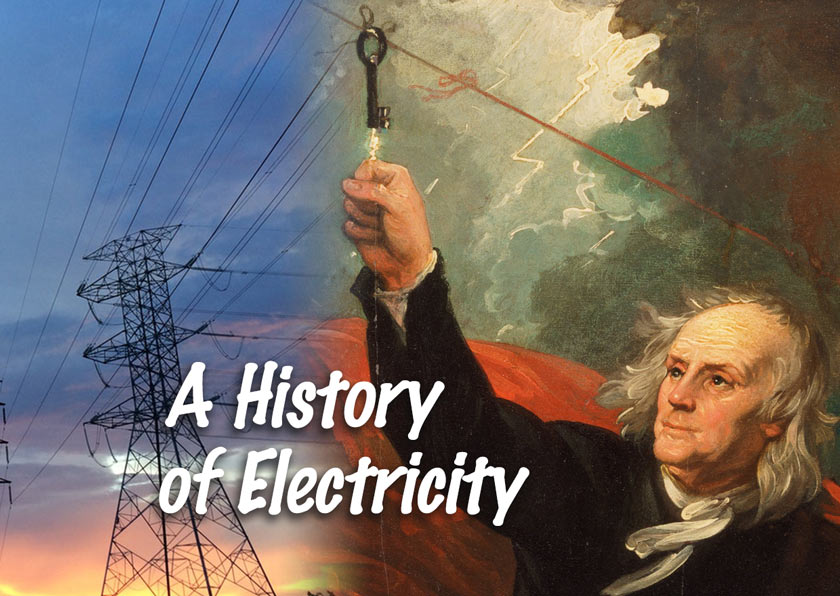
The earliest fascinations with electricity date back thousands of years. Humans all over the world have been amazed with the natural electrical currents that are all around us in the form of lightning and static electricity. However, it wasn’t until the 1700s that a key development in harnessing electrical power was made. That groundbreaking experiment was conducted by none other than Benjamin Franklin in 1752. His theory was that lightning was a source of electrical currents. Franklin wanted to prove it. His experiment involved tying a metal key to the string of a kite during a storm. He hypothesized that the electricity from the storm clouds would travel down the string to reach the metal key. He was correct and even received a shock! Luckily, he wasn’t seriously hurt by the electrical shock. That simple experiment got the ball rolling on what would become one of mankind’s greatest inventions.

Early Uses

Over the next century or so, many different inventors tried to find ways to produce light using electricity. Thomas Edison, one of the most notable inventors in American history and in the history of electricity, worked years on end to find the perfect way to produce light with electricity. By 1879, over 100 years after Benjamin Franklin’s experiments, Edison was able to invent the first reliable electric light bulb. Edison also invented a way to produce electricity with small electrical stations. Edison’s company, General Electric, is still around today! By the 1880s, Edison’s electrical stations were built in several U.S. cities. Although the amount of power produced was small, it was still enough to power several blocks of a city. It would take another 50 years before most people in large cities had electrical power. Even by the 1930s, the number of Americans in smaller towns, farms and rural areas who had electricity was very small: only one out of 10 families had power.

The Expansion of Electricity

Privately owned electric companies became common in large cities throughout the 1920s and 30s. As a business decision, these private companies decided it was much too expensive to run electrical lines to smaller towns and rural areas. In the mid-1930s, then president Franklin D. Roosevelt strongly believed that America’s farmers deserved to have the same access to electricity as the rest of the country. By 1940, the president’s efforts had been realized and nearly 40 percent of rural areas and farming families had electrical power and nearly 75 percent of all Americans had electrical power in their homes. Here in Tennessee, the Tennessee Valley Authority setup the Electric Home and Farm Authority. This new organization allowed farmers assistance with purchasing electric stoves, washing machines and other appliances.

Electricity in the 21st Century

Today’s electrical technologies have evolved into many different categories. Production of electricity has also evolved with the addition of wind turbines, solar energy production, geothermal energy, and hydroelectricity.

Even with all the electrification throughout the world, many places still lack electrical power. Over one billion people throughout Africa and as much as half the households in India don’t have electric power. However, nearly 83 percent of the world’s population has access to electricity.

We hope you’ve enjoyed learning a little about the history of electricity. The professionals at Gervais Electric are always on hand when any questions or electrical needs arise. Our electricians are licensed, bonded and insured. We also stay current on all continuing education and electrical codes. If you’re located in the Nashville, Franklin, Brentwood or surrounding Middle Tennessee areas, we’d love to hear from you! Give us a call at 615-963-1436 or send us a message below.

Installing Outdoor Security Lighting for Your Home

Your home may already be equipped with an outdoor light or two. But maybe it doesn’t feel quite safe enough. If you want to feel a little safer in your home when you turn off the lights, choosing outdoor security lighting that’s operated with motion sensors may help. The right outdoor security lighting system can truly make a difference when it comes to the safety of you, your home and your family. If you’re interested in a security lighting plan for your home, you’re in the right place. Gervais Electric—based in Franklin, TN—serves all of the Middle Tennessee area with high quality electrical products and services. We’d like to take a few moments to share some benefits of outdoor security lighting, installation process, energy efficiency options, and how you can get started with an installation for your home right away.

Benefits of Outdoor Security Lighting

Crime Deterrent – When it comes down to it, security lighting goes a long way in deterring criminals. When would-be criminals see a home that’s fully lit in the front, they do not want to enter the property for fear of being seen, caught and arrested. A well-lit home is a sure-fire, first line of defense against home invasion. Compared to a home alarm system, outdoor security lighting is the most affordable and effective forms of crime deterrent you can buy!

Added safety – It’s difficult to walk around safely in the dark. No matter how well you may think you know your yard, there is still potential that you or a guest could trip at night if you don’t have proper lighting. Or, maybe you forgot to turn on the porch light when you left the house. if you’ve ever had to fumble around on your front porch looking for the right place to put the key, call Gervais Electric!

Convenience – If you enjoy spending time outdoors, security lighting can help provide a better way to do so by giving you a great new way to enjoy your yard. These days, the right kind of lighting not only looks nice, but offers the added benefit of a well-lit yard. When the weather is nice, nothing beats being outdoors even once the sun has set!

Energy Efficiency of Today’s Security Lights

Products that are available on the market today don’t use a lot of energy. Unlike the halogen bulbs of the past that used 200 or 250 watts of power, the new energy efficient, low voltage, LED lighting options use anywhere from 25 to 35 watts. Properly placed lights like this will provide plenty of light and save you on energy costs. Options available for these outdoor security lights also include motion sensor or dusk-to-dawn settings that allow more control over usage and security.

Why Hiring a Professional for Installation is Key

When you’re ready to install outdoor security lighting, it’s essential to make sure the installation is performed by a licensed professional. There are several reasons why this is important. First, you want to make sure the lighting is powered correctly so that each fixture operates as it should without overloading the circuitry. Secondly, it’s important for safety purposes that all the lighting is installed in positions that offer the most coverage with the least number of fixtures. Your home may only need two or three fixtures to illuminate your entire front yard, but the professionals here at Gervais Electric will know for sure. Third, choosing the right product for your security lighting can be a daunting task. We have the experience you can count on to make sure you’re getting exactly what fits your needs.

Offering a high standard of satisfaction to all our clients, big of small, we take pride in delivering results that are always in compliance with the best practices, codes and standards in our industry. The results-oriented work we provide is dependent on our team of experts—a well-oiled machine—ensuring expedient services that will solve your problem and complete your project without risking safety of your home, your family, or your work environment.

Please call us at (615) 973-1436 or send us a message through the form below. One of our friendly service professionals will be in touch. Thanks for visiting us. We look forward to speaking with you very soon!

Should I Have an Emergency Backup Generator?

With winter ice storms, spring thunderstorms, and summer tornados, Nashville has its fair share of power outages caused by nasty weather. Everyone has experienced a temporary loss of power, and some have even experienced power outages that last for days. If you’re part of the latter group, you know how difficult it can be to go more than a few hours without power in your home. It’s probably led you into a thought pattern of purchasing an emergency backup generator for your residence. To help keep your home powered, come what may, a backup generator may be exactly what you need in those circumstances of power loss. The huge convenience of being able to keep things running after a debilitating storm usually outweighs the added cost of having a generator. If you’re still debating, or just researching the topic for more information, then you’ve come to the right place. At Gervais Electric we’ve compiled this useful guide to help you through the consideration process.

What necessities run on electricity in your home?

For most homeowners deciding to get a generator depends on what essentials need electricity to run such as your heating/cooling system, hot water heater, refrigerator, oven and stove, etc. Many of these items can run on gas, so the first step is to find out what your essential appliances use. If you find that your most important appliances run on electricity, that will help guide you down the path to finding the right size generator for your home’s power needs.

Do you have enough outdoor space for a backup generator?

Generators come in all sizes. From small, portable generators, to permanently installed standby generators much like the footprint of an air conditioner unit. Smaller generators typically run on batteries or gasoline whereas the larger standby units run on gas or propane. If you go with the more affordable, portable generators that run on gasoline, you will need to make sure you have a safe place to operate it outdoors. A covered, open-air area for proper ventilation at least 15 feet from your home is best to avoid carbon monoxide fumes entering your home. A single-family home may offer you plenty of room for this, while an apartment or multi-family building will not. Keep in mind that a gasoline generator will also require space for backup fuel to be stored safely in plastic fuel cans.

Types of generators

There are generally three main types of generators: portable, inverter, and standby.

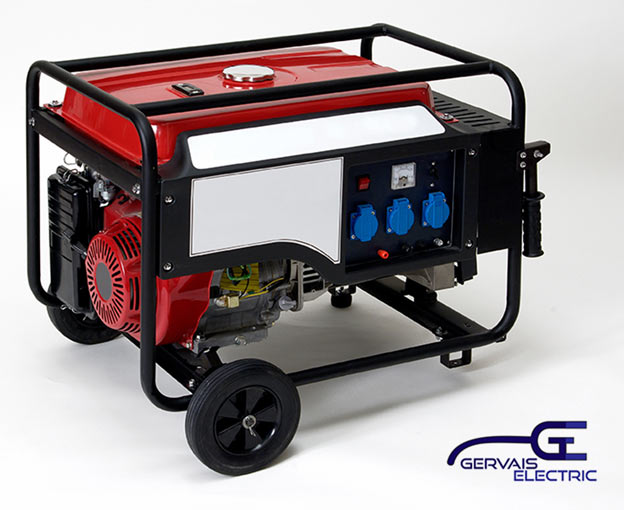
Portable generator: A portable generator is powered by gasoline or diesel fuel and is good for providing temporary electrical power. Portable generators usually provide enough power to run a television, a freezer and a refrigerator. Depending on your needs, this may be the perfect fit as a backup generator for you during a temporary power outage. These can be purchased at your local home store.

Inverter generator: An inverter generator produces AC power with an engine connected to an alternator. AC power produced by the generator is converted into DC power by use of a rectifier for standard usage with home electronics. These generators produce high levels of performance, but they usually come at a premium price. Inverter generators are much more efficient than a standard portable generator because the engine automatically idles up and down depending on the demand that’s needed at the time. It will still run on gasoline or diesel but will not need to be refueled as often as the standard portable generator. These can be purchased at your local home store. Large versions of these generators can be wired directly into your electrical panel with a transfer switch to power your entire home. Mid-sized and small, recreational version of inverter generators can also be purchased but they will not wire directly into your electrical panel. Instead, you will individually plug appliances into the generator.

A Standby Generator

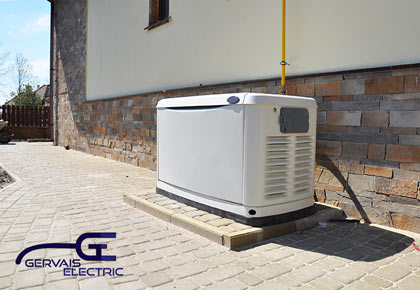
Standby generator: A standby generator is a more permanent type of generator that can be installed at your home. It is a great choice as an emergency backup generator because it is wired directly into your home’s electrical panel and typically runs on propane or natural gas. The standby generator operates automatically during a power loss by sensing in only a couple of seconds when a power outage has occurred. It also delivers permanent power protections as a standby generator with an automatic transfer switch for safety. The standby generator can easily power your entire home electronics, heating and air conditioning system, as well as lights and hot water. This type of system will need to be installed by a licensed electrician. Never attempt to wire directly into your electrical panel unless you are a licensed electrician!

If you’re interested in learning more about installing an emergency backup generator in your home, contact the friendly team at Gervais Electric for a no-hassle consultation. Reach us at 615-973-1436 in the Nashville area, or send us a message below and we will get back in touch with you shortly!

Simple Cost-Cutting Tips to Save Electricity In Your Home

Homeowners across the board are constantly on the lookout for effective and efficient ways to reduce utility costs and increase energy savings. The professionals at Gervais Electric want to share some important cost-cutting tips with you. When you reduce the amount of electricity that you use in your home on a daily basis, it not only contributes to a better environment, but it also reduces your monthly utility bills as well. There are a few simple tips to enable you to save electricity month after month, year after year and minimize the use of energy in your home. To reduce energy consumption in your home try taking advantage of these simple tips.

LED Bulb vs Incandescent Bulb

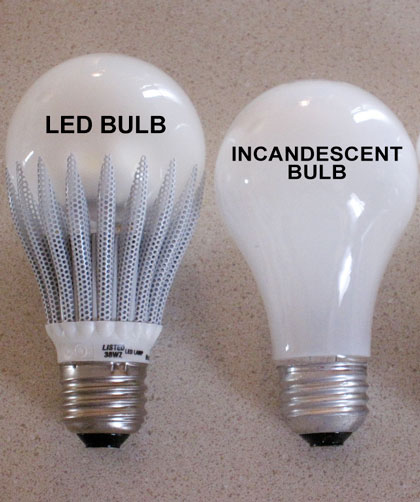
For starters, switching out all the light bulbs in your home to LED bulbs is a surefire way of reducing the amount of electricity used each day. The primary difference between the styles of bulbs is the way in which they produce light. Typical incandescent light bulbs use heated metallic filaments to produce light while fluorescent bulbs produce light by way UV frequencies that are produced while LED bulbs use a light emitting diode—a far more energy efficient option. Compared to standard incandescent light bulbs, the other two options are a far better choice when energy savings is the goal.

The next simple tip is to invest in lower wattage lamps or bulbs. Lower wattage lamps and bulbs produce a good deal of light but use fewer watts, which ultimately results in energy conservation. By using LED bulbs, you can have the brightness of high-watt bulbs with the energy savings of low-watt bulbs.

In addition, you should discipline yourself to unplug electrical items that you do not use throughout your living space. Appliances and other electrical devices that are not in use will still utilize electricity when plugged into outlets. Unplugging any such devices will contribute to reduced electric bills over time.

Along this same line, we highly recommend you get in the habit of keeping your computers set to standby mode whenever they are not in immediate use. Again, this simple act minimizes the use of electricity and definitely contributes to energy savings.

Another simple yet practical tip to help save electricity in your home is to set the temperature in your refrigerator to approximately 40 degrees Fahrenheit. There is no need to set your refrigerator or freezer to settings that are too cold. Typically, refrigerators should maintain a temperature near 40 degrees Fahrenheit to perform at peak efficiency levels as well as reduce energy costs. We also suggest you set your freezer temperatures at about zero degrees to contribute to your savings over time.

Finally, if your home uses an electric hot water heater, we suggest you get in the habit of washing your clothes with cold water in your continued efforts to save energy and minimize your electric bill. Using hot water to wash your clothes has been found to be one of the biggest wastes of energy in homes. Switching over to cold water will still get your clothes clean but will allow you to use less energy thereby helping lower your monthly energy expenses.
The team here at Gervais Electric, Inc. want to remind you to always use the electricity in your home wisely. Electricity certainly affords us all a great deal of comfort, but it is important to be aware of the simple fact that energy is indeed an expensive resource that people often take advantage of.

With these thoughts in mind, we hope you have found our simple tips to save electricity in your home useful and that you will make every effort to invest time and effort into putting these simple tips into action in your home. And don’t forget, if you need any type of electrical services, then we are the team for you. We look forward to serving you and would like to send along wishes from our family to yours for a safe and Happy New Year ahead!!

The Benefits of Installing Light Dimmers In Your Home

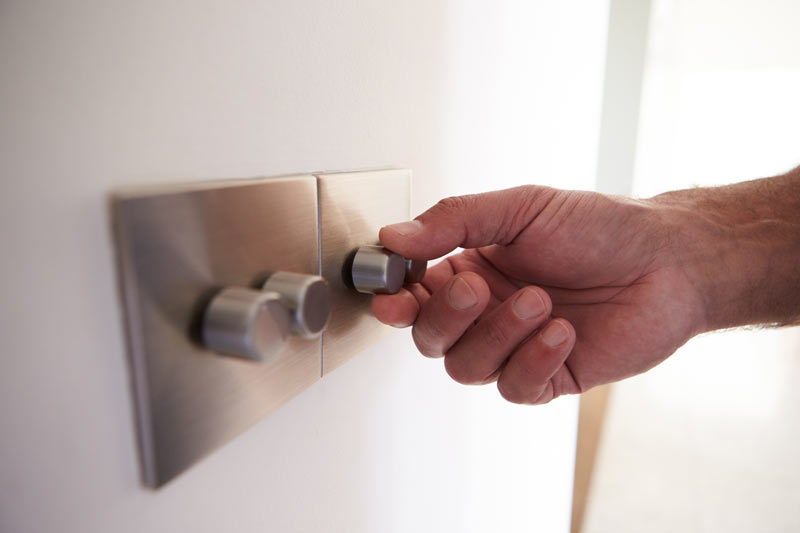
As most of us know, a dimmer is a simple electronic device that allows you to control the overall brightness of the lights in your home. To control your light dimmers, you can either opt to install a simple wireless control knob or you can install a switch onto a wall in your living space. In addition, with the many advances in technology today, you can opt to use smart lighting in your home and dim those lights with the appropriate app on your smart phone from anywhere at any time.

Dimmer switches tend to be the most popular choice of homeowners when it comes to controlling the lighting in their homes. Not only are they simple to operate with a single knob, but they are every bit the traditional option for many homeowners. Innovative scene dimmers are also available that present homeowners with more advantages than the typical manual dimmer. Some of those advantages include convenience, more energy savings and greater design flexibility. Most homeowners still give favor to the simple everyday dimmer switches.

There are many benefits and advantages of installing light dimmers in your home. For starters, they contribute greatly to the security of your home. Proper home lighting, especially during the evening hours, can be quite advantageous for deterring intruders and keeping away unwanted guests.
Next, dimmers help to reduce monthly energy consumption in your home. When typical lighting fixtures are all that you have installed, they are always either in the on or the off position at all times. When you install light dimmers, you have the ability of reducing the lighting levels in certain living spaces as needed, which ultimately reduces money spent on monthly lighting and energy bills.

Finally, if you elect to install the more state of the art, innovative scene dimmers in your home, you now have the capability of automating the dimmers in various locations throughout your home. You can assign customized settings in different rooms throughout the home using time settings that suit your needs. This greatly contributes to reduced energy costs and a more energy efficient home. It is also much more convenient and provides greater levels of security to your home.

If you are interested in learning more about light dimmers, or are looking to install dimmers in your home, then you have come to the right place. Our highly skilled and trained electricians here at Gervais Electric, Inc. are on hand to answer all your questions, address any concerns, and provide you with a complete consultation and an estimate for the installation of dimmers in your home. Our team of professionals stands ready to serve you with your every electrical need. Our whole team takes tremendous pride in not only our quality products and services, but our high customer satisfaction rating as well.

With the holidays right around the corner, it may be the perfect time to have effective and energy efficient dimmers installed in your home. Whether you want to add a warm, comfortable feeling to your home setting or you’re looking to conserve energy while saving money on your electric bills, then affordable light dimmers may be the perfect solution for you.

Simply give us a call or send us an email below to schedule your free consultation today. Our electricians will make their way out to your home, perform a simple inspection of your living space, and determine the best plan of action for your home and family. Don’t delay. Contact our friendly, professional team today. You’ll be more than glad you did. From our family to yours, we wish you a safe and happy holiday season!

Christmas Lighting Safety Tips to Keep In Mind This Holiday Season

If you are like most homeowners who take pride in decorating their homes with lights during the holiday season, then take time out to read these important tips about the hidden risks Christmas lights can bring. Gervais Electric, Inc. is committed and dedicated to providing all our valued clients with valuable information, quality products and services. That includes sharing these Christmas lighting safety tips to keep your home and family safe.

  • First and foremost, it is important that you do not overload circuits. If you have the need to plug in multiple strands of lights into an electrical outlet, then be sure to always use a surge protector and try to use multiple circuits when possible.
  • Do not run any power cables for your lights under your carpets or rugs. If cables are out of sight, there is a chance that they can be damaged when furniture is placed on them or people are walking atop them which can ultimately result in shocks or fires.
  • Be sure that all your lights are spaced out evenly and not bunched altogether since this can cause the lights to become overheated and therefore result in some hazardous situations.

LED Christmas Lighting
LED Christmas Lights

Be sure when doing outside lighting that you only use those lights that are designed to be used on the exterior of your home. Never use interior lights outdoors.

  • Take time out to examine all your strands of lights and all cords to be sure they are not frayed, cut, cracked or showing any other signs of damage. If they are damaged, be sure not to use them.
  • Be smart and ensure that the lights on your Christmas tree are separated and kept away from your ornaments to avoid overheating.
  • When you are away from home or sleeping, never leave your Christmas tree lights on. Make it a point to unplug your tree lights not just turn them off to avoid starting a fire. Automatic timers are also useful for making sure your lights turn off and on at your desired times.
  • Avoid the use of metallic ornaments near lights. This type of ornaments can actually act as live conductors if there is any sort of tear in the light strand.
  • If you notice at any point that the cords you are using for your Christmas lights are starting to feel a bit warm, immediately stop using them.
  • Never use spray on snow with tinsel since when combined they can be flammable.
  • If you are being energy ‘green’ conscious, consider using LED lights since they burn a lot cooler and use much less power than regular lights.
  • If you are putting Christmas lights on your roof, be sure to use a stable ladder and have someone hold the ladder while you are putting the lights up.
  • Finally, if you have a fresh Christmas tree, remember that the older the tree, the drier it will become and when coupled with a flaky bark on your real tree, electricity can easily start a fire.
  • We hope you have found these Christmas lighting safety tips useful. If you have any questions about the proper use of Christmas lights or have any other holiday decoration concerns, feel free to reach out to us. Our highly skilled and trained professionals are on hand to answer all your questions and assist in any way possible. If you  need any electrical repairs or services, then we are the team for you. There is no project too big or too small for our professionals. Offering affordable prices, attractive timelines, and superior products and services, rest assure that you can always depend upon Gervais Electric to handle all your electrical needs. From our family to yours, enjoy your Christmas decorating and have a safe and happy holiday season!!